
Blog
Terracotta Pots for Plants: The Unsexy Science of Why They Work

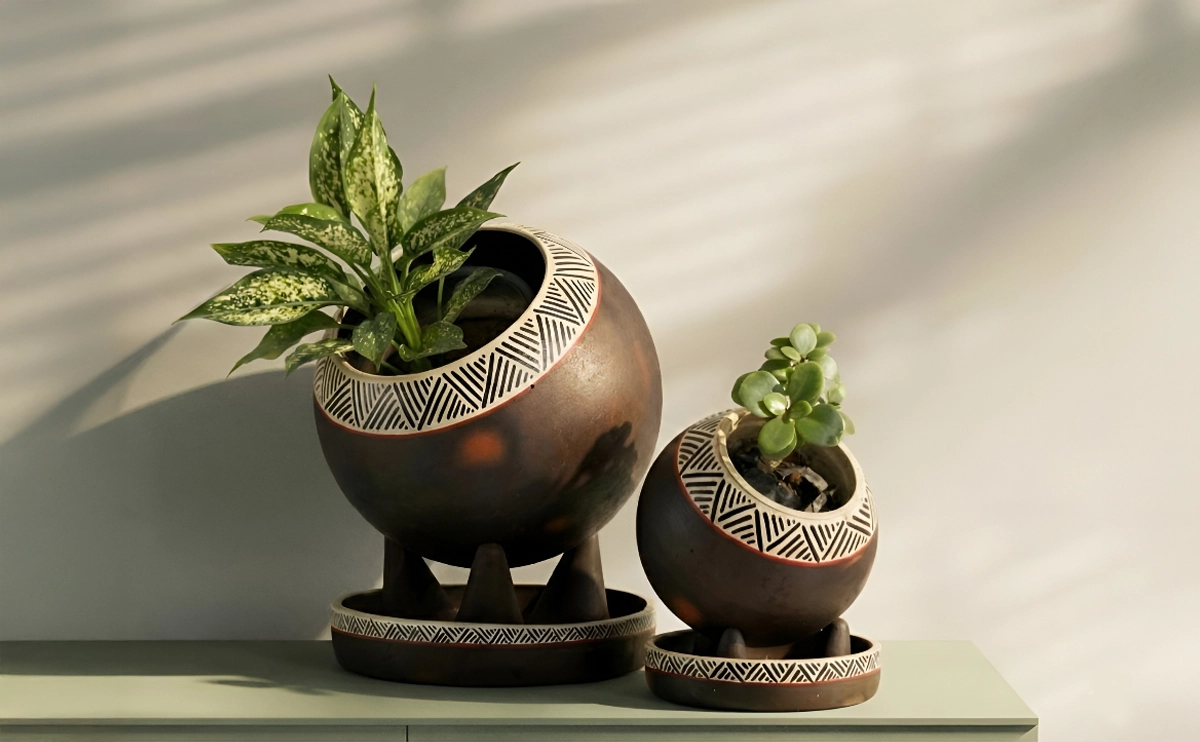
There’s a romantic case for terracotta pots — the warm colour, the “honest” material, the 4,000-year pedigree. You’ve read that case a dozen times. This isn’t that piece.
This is the boring case: terracotta works for plants because of physics. Specifically, the porosity of fired clay, the capillary action of water through a clay wall, and the evaporative cooling effect of that water on the root zone. If you care about keeping plants alive — particularly in an Indian climate that swings from 45°C dry heat to 95% humidity monsoons — understanding why terracotta works is worth ten minutes. It changes what you plant in it and how you water it.
What’s actually happening inside the pot
Terracotta is fired clay, baked at 900–1100°C. At that temperature the clay particles fuse but the result stays porous — meaning the wall of the pot is riddled with tiny channels. You can’t see them. But water can move through them.
When you water a plant in a terracotta pot, three things happen simultaneously:
- Water saturates the soil.
- A small fraction of that water wicks into the pot wall itself through capillary action.
- That water in the wall evaporates from the outside surface of the pot, taking heat with it.
The net effect: the root zone stays slightly cooler than the surrounding air, and excess water drains (or evaporates) faster than it would in a sealed pot. For most plants, that’s exactly what you want.
Why this matters in India specifically
A plastic pot in 45°C April sun on a Delhi balcony can have internal soil temperatures of 48–52°C. Roots cook above 38°C. This is why a lot of plastic-potted plants die in May and early June even with regular watering — the plant isn’t thirsty, it’s being slow-roasted.
A terracotta pot in the same conditions stays 4–8°C cooler inside because of the evaporative-cooling effect. That’s the difference between a plant that limps into the monsoon and one that dies before May 15th.
In reverse: in Bangalore’s cooler weather, terracotta’s breathability prevents root rot by letting excess moisture escape the soil through the wall instead of staying trapped.
Which plants genuinely love terracotta
Not all plants. This is where the Instagram advice falls apart — there’s no universal “plants in terracotta = better.” It depends on the plant.
Plants that thrive in terracotta:
- Tulsi — hates wet feet, loves evaporative cooling.
- Money plant — tolerates almost anything, but visibly greener in clay.
- Snake plant — loves the drainage and air around the roots.
- Aloe vera, cacti, succulents — terracotta is essentially made for these.
- Rosemary, oregano, thyme — Mediterranean herbs, happy in the semi-dry soil terracotta creates.
- Curry leaf — grows steadily in a well-sized clay pot; sulks in plastic.
- Jasmine — the root system breathes better.
Plants that prefer plastic or glazed ceramic:
- Ferns of most kinds — they want consistent moisture; terracotta dries them out.
- Peace lily — same.
- Calatheas — drama queens, hate soil drying.
- Anything you want to let go semi-dry between waterings but then fully soak (tropical houseplants) — a plastic pot holds water more predictably.
The neutral camp (fine in either): pothos, philodendrons, most herbs other than the Mediterranean ones.
How terracotta changes your watering
The single biggest mistake people make moving plants to terracotta is watering on the same schedule they used for plastic. Don’t.
Terracotta loses moisture faster. That’s the feature. But it means:
- You’ll water slightly more often — maybe 15–25% more frequently in warm months.
- You can water more deeply without drowning the plant — the excess escapes.
- Overwatering risk drops significantly — hard to actually drown a plant in a terracotta pot with good drainage.
The counter-intuitive upside: terracotta forgives watering mistakes better than plastic does. Forget to water for three days? The plant will be thirsty but not rotting. Water too much? Most of it escapes.
Drainage still matters
Terracotta’s porosity is not a substitute for drainage holes. The wall releases water slowly; holes in the base release water fast. You need both.
When buying: hold the pot up to the light or look at the base. At minimum one hole, ideally three or four for anything above 8 inches in diameter. If there are no holes, don’t use it for planting — it’s a decorative cachepot (fine, but put a drilled pot inside it).
How long a terracotta pot lasts
Cared for properly, indefinitely. We know of pots in Indian homes that have been passed down three generations. The risk factors are:
- Frost (not relevant to most of India) — water in the wall freezes, expands, cracks the pot.
- Impact — dropping it, obviously.
- Salt buildup — from hard water. White crust on the outside of the pot is salt migrating out through the wall. Harmless to the plant, visually annoying. Wipe off with a damp cloth or ignore — many customers find the patina attractive after a year or two.
- Root expansion — very large plants can crack a pot from inside over years. Re-pot before this happens.
The counter-argument you should hear
Terracotta isn’t always the right choice. If you live in a dry, hot city and travel a lot, plastic or glazed pots hold water longer and are safer for plants while you’re away. If your balcony gets full afternoon sun, terracotta works, but you’ll water more. And some plants — ferns, certain tropical houseplants — flatly prefer a less-breathable pot.
The point of understanding the physics is that you can match the pot to the plant intelligently. Not blindly.
The short version
Terracotta pots work because clay breathes, moisture wicks, the root zone stays cool, and excess water escapes. For most of the plants Indian homes grow — tulsi, money plant, snake plant, succulents, Mediterranean herbs, jasmine, curry leaf — this is exactly what the plant wants. For a few (ferns, tropicals), it isn’t.
Match the pot to the plant, water slightly more often in clay, and the plant will outlive the cheaper pot you would otherwise have bought.
Browse Pipihiri’s full terracotta planter range — every pot made from natural clay, fired in Indian artisan clusters, with proper drainage already cut.